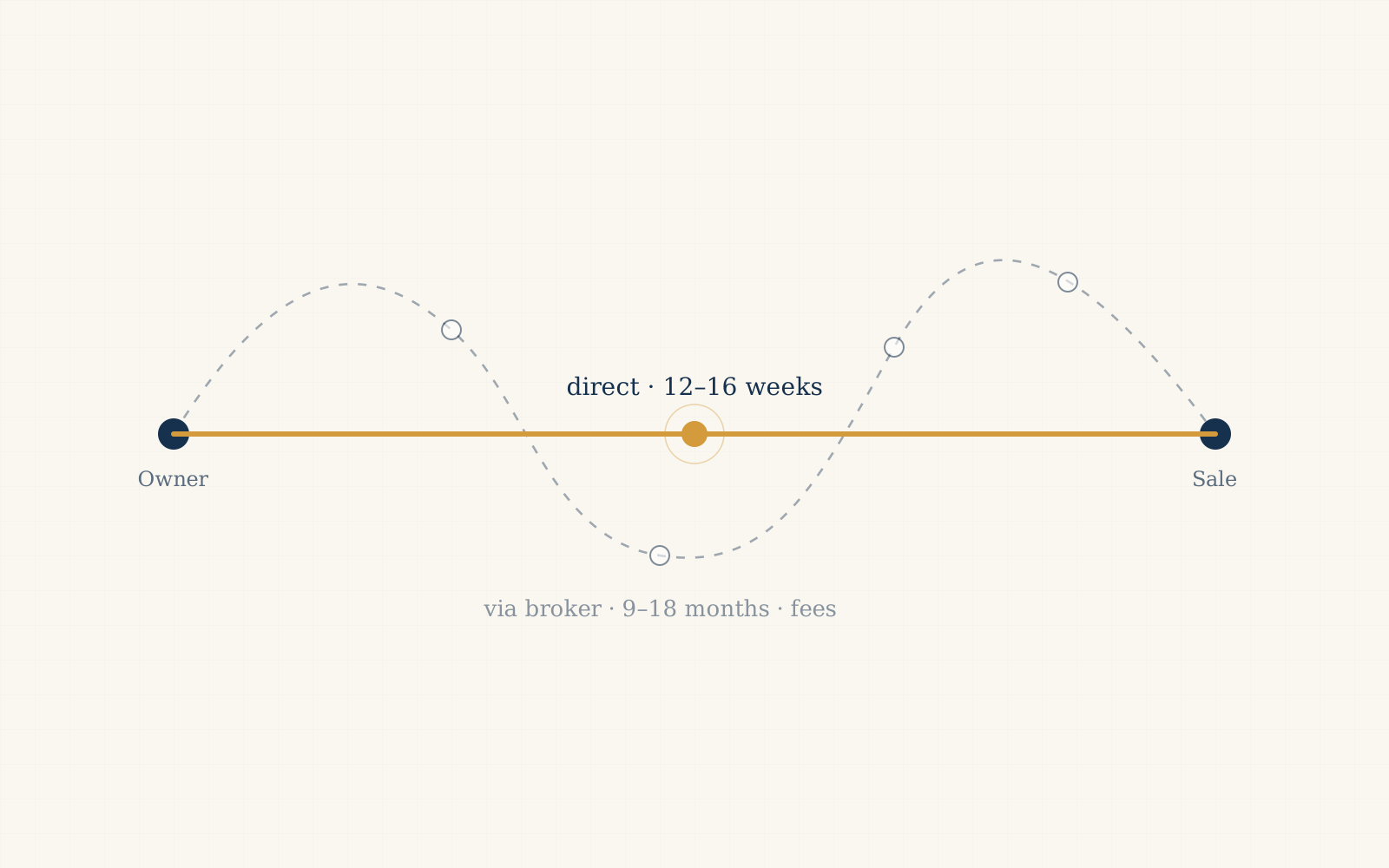
When an owner decides it might be time to sell, the default assumption is to call a broker. It's the well-worn path — and for some businesses it's the right one. But it isn't the only way, and for many owners a direct sale is faster, cheaper, and far less stressful. It's worth understanding the difference before you commit.
What a broker actually does
A business broker markets your company to a pool of potential buyers, manages enquiries, and helps shepherd a deal to completion. For that, they typically charge a success fee — often 8% to 12% of the sale price, sometimes with an upfront retainer on top. On a £1M sale, a 10% fee is £100,000.
In exchange you get reach and a middleman. But you also get a process that can run nine to eighteen months, a business marketed more widely than some owners are comfortable with, and an incentive structure where the broker is paid to close a deal — not necessarily to protect what happens to your business afterwards.
What a direct sale looks like
Selling direct means dealing with the buyer themselves, with no intermediary between you. The advantages are real:
- No broker fee. The price you agree is the price you receive. Nothing is skimmed off the top.
- Speed and control. With a single, serious buyer, the process moves at your pace — often completing in 12 to 16 weeks rather than a year or more.
- Confidentiality. Your business isn't listed or shopped around. Conversations stay private, protected by an NDA from the start.
- A relationship, not a transaction. You get to know the person who'll take over — and judge for yourself whether you trust them with what you've built.
The right question isn't "broker or direct?" — it's "who is going to end up owning my business, and do I trust them?"
The honest trade-off
A direct sale isn't automatically better. A broker gives you competitive tension — several buyers bidding can push the price up — and that genuinely matters for some businesses. A direct sale trades some of that reach for lower cost, more speed, more privacy, and more control over who ends up owning your company.
I'm a direct buyer, so I have a view — but I'd rather you make the choice with your eyes open than feel pushed. If a competitive process is right for your business, a good broker earns their fee. If what you value most is a fair price, a clean process, and a trustworthy owner for your team, a direct conversation is often the better route. Either way, it costs nothing to talk it through.