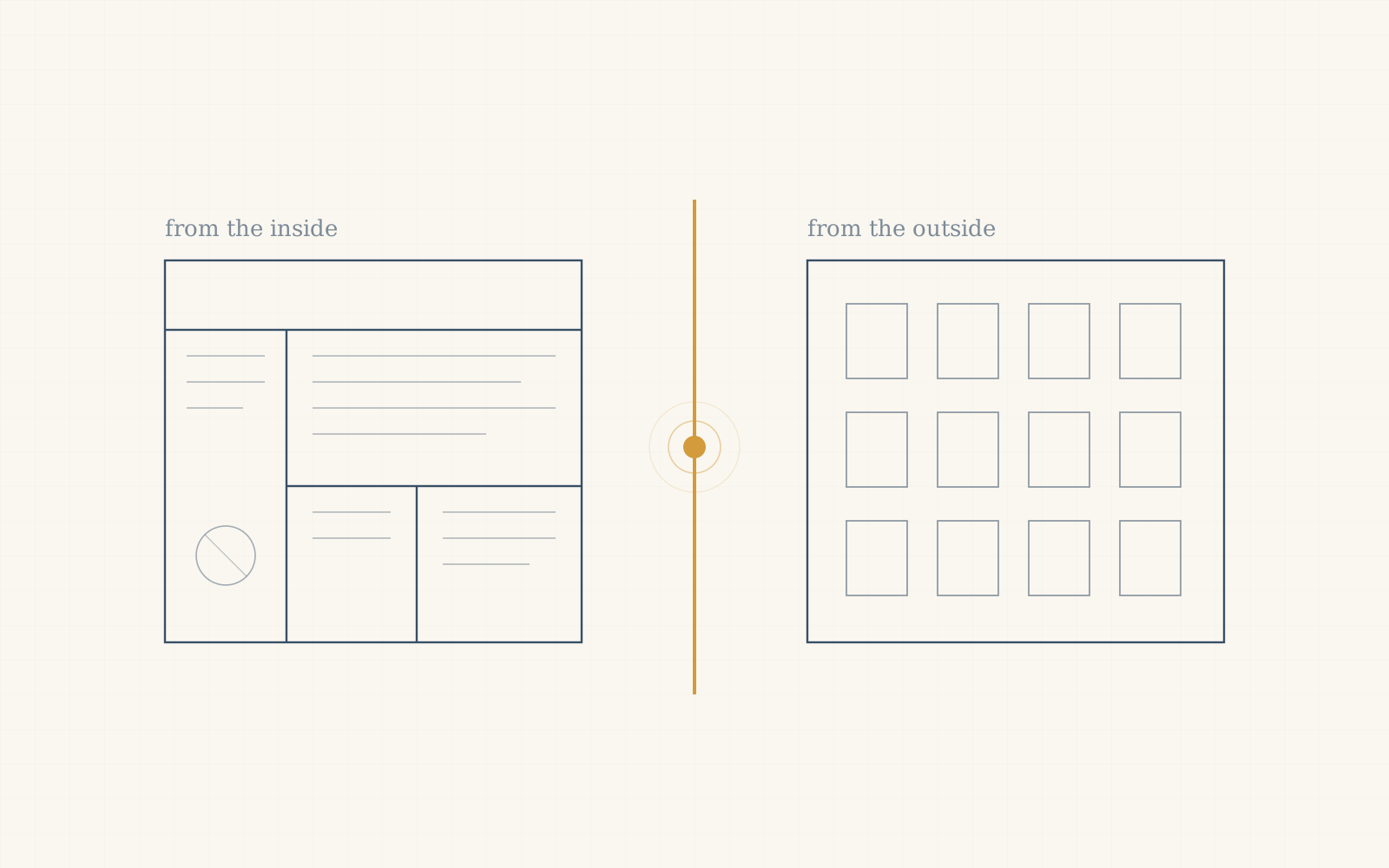
Every owner knows their business from the inside. You know which customers always pay late, which member of staff really holds the place together, and why last year's dip was a one-off. You've lived it.
A buyer sees none of that. They see the business from the outside — through the accounts, the contracts, and a handful of conversations. The gap between how you see your business and how a buyer sees it is the single biggest reason good deals fall apart. Closing that gap before you go to market is the most valuable thing you can do.
Buyers price certainty, not potential
Owners love to talk about potential: the markets you could enter, the products you could launch, the growth that's just around the corner. It's natural — you can see what the business could become. But buyers are wary of potential, because potential is unproven. What they pay for is certainty: reliable, repeatable profit that will still be there after you've gone.
The more your business depends on things a buyer can count on — recurring revenue, contracted customers, a capable team — the more confident, and more generous, they can be.
The four questions every buyer is really asking
- Will the profit survive the handover? If the business runs on your personal relationships and knowledge, a buyer has to assume some of that leaves with you.
- How concentrated is the risk? One customer worth 40% of revenue, one supplier with no backup, one key employee with no successor — each of these lowers the price.
- Are the numbers clean? Messy accounts, blurred personal-and-business expenses, and informal arrangements all create doubt — and doubt is priced in.
- Can I picture running this? A buyer needs to see how the business works without you in it. If they can't, they hesitate.
The businesses that sell well aren't always the biggest or the fastest-growing. They're the ones a buyer can understand quickly and trust to keep performing.
What this means for you
You don't need to fix everything before starting a conversation — no business is perfect, and a good buyer knows that. But the more you can reduce a buyer's uncertainty, the stronger your position. Document how things work. Reduce your personal indispensability. Tidy the numbers. Address the obvious concentration risks.
When I look at a business, I'm not hunting for reasons to knock the price down — I'm trying to understand it well enough to be confident it will thrive under new ownership. The clearer the picture you can give me, the better that conversation goes for both of us.